Ingredients
Method
To Make Pad Thai Sauce
- Melt the Palm Sugar: Add palm sugar to a small pot over medium heat. Stir continuously until it caramelizes and turns a dark amber color—keep an eye on it, we don’t want burned sugar!
- Add Liquid Ingredients: Immediately add water, fish sauce, and tamarind paste. The sugar might harden, which is fine! Just bring the mixture to a gentle simmer and turn off the heat. Let it sit while you prep the other ingredients.
To Make Pad Thai
- Prepare Noodles: After soaking, cut the drained noodles in half with scissors to make them more manageable.
- Mix Tofu and Vegetables: In a bowl, combine the soaked noodles, tofu, garlic, shallots, preserved radish, dried shrimp, and chili flakes.
- Heat Wok: Heat your trusty wok or large nonstick skillet over high heat. Add enough oil to coat the bottom.
- Sear Shrimp: Add the shrimp first, sear until they are opaque, and remove them from the pan.
- Sauté Aromatics: In the same wok on medium heat, add a little more oil if needed then toss in the contents of the tofu bowl. Stir-fry until the garlic is golden and the shallots are wilted—smell that aroma?
- Combine Noodles and Sauce: Increase the heat to high, add the drained noodles and the sauce, stirring until the noodles absorb the sauce. If the noodles seem undercooked, a splash of water can help.
- Cook Eggs: Once everything is well combined, push the noodles to one side, add oil, and crack in the eggs to scramble in the empty space. Allow them to cook for about 30 seconds, then toss everything together.
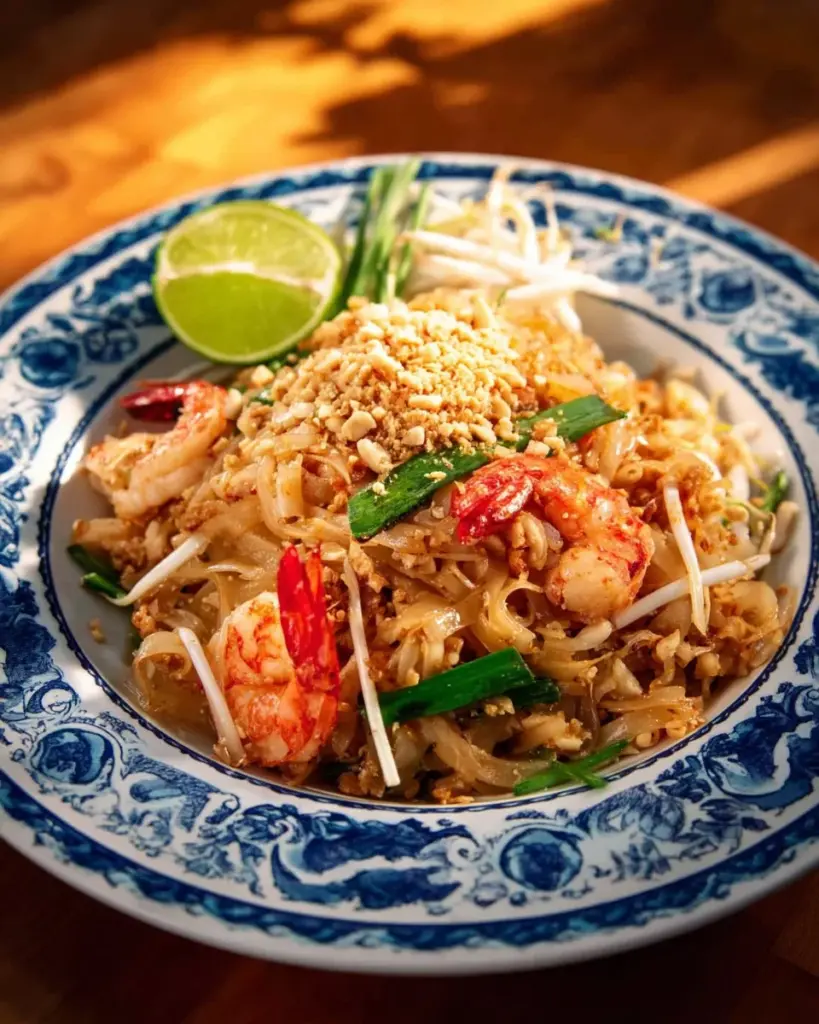
- Finish with Fresh Ingredients: Finally, add bean sprouts, garlic chives, and half of the roasted peanuts. Mix well and serve immediately with lime wedges and the remaining peanuts for those who love extra crunch.
Notes
Store leftovers in an airtight container in the fridge for up to three days. It’s best eaten fresh but can be reheated with a splash of water to loosen it up.