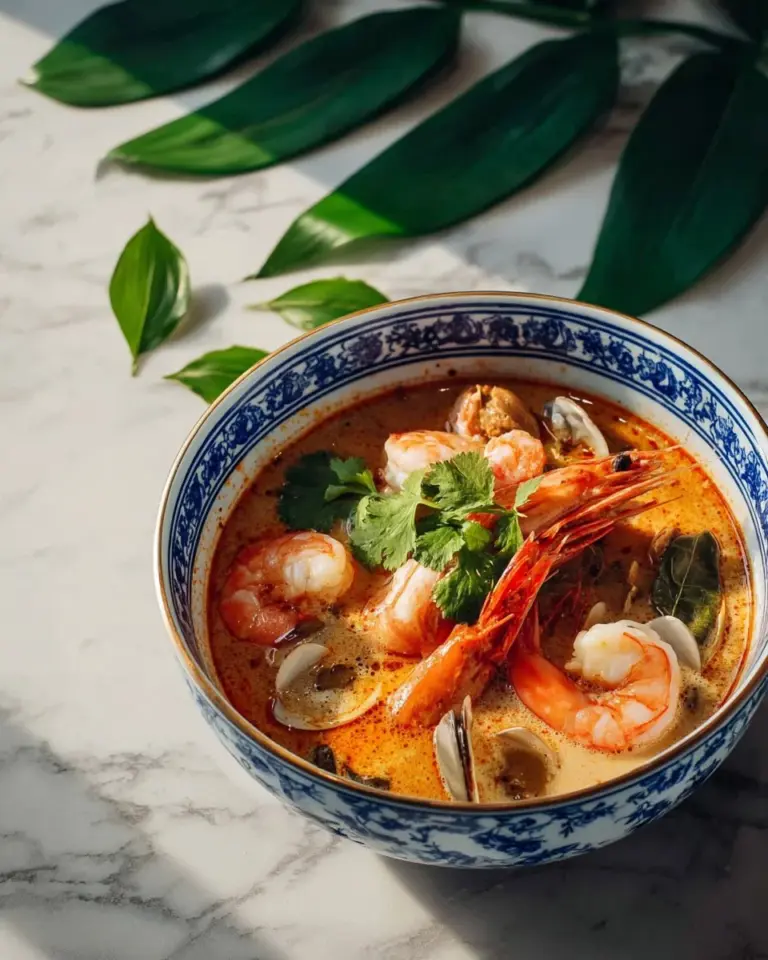
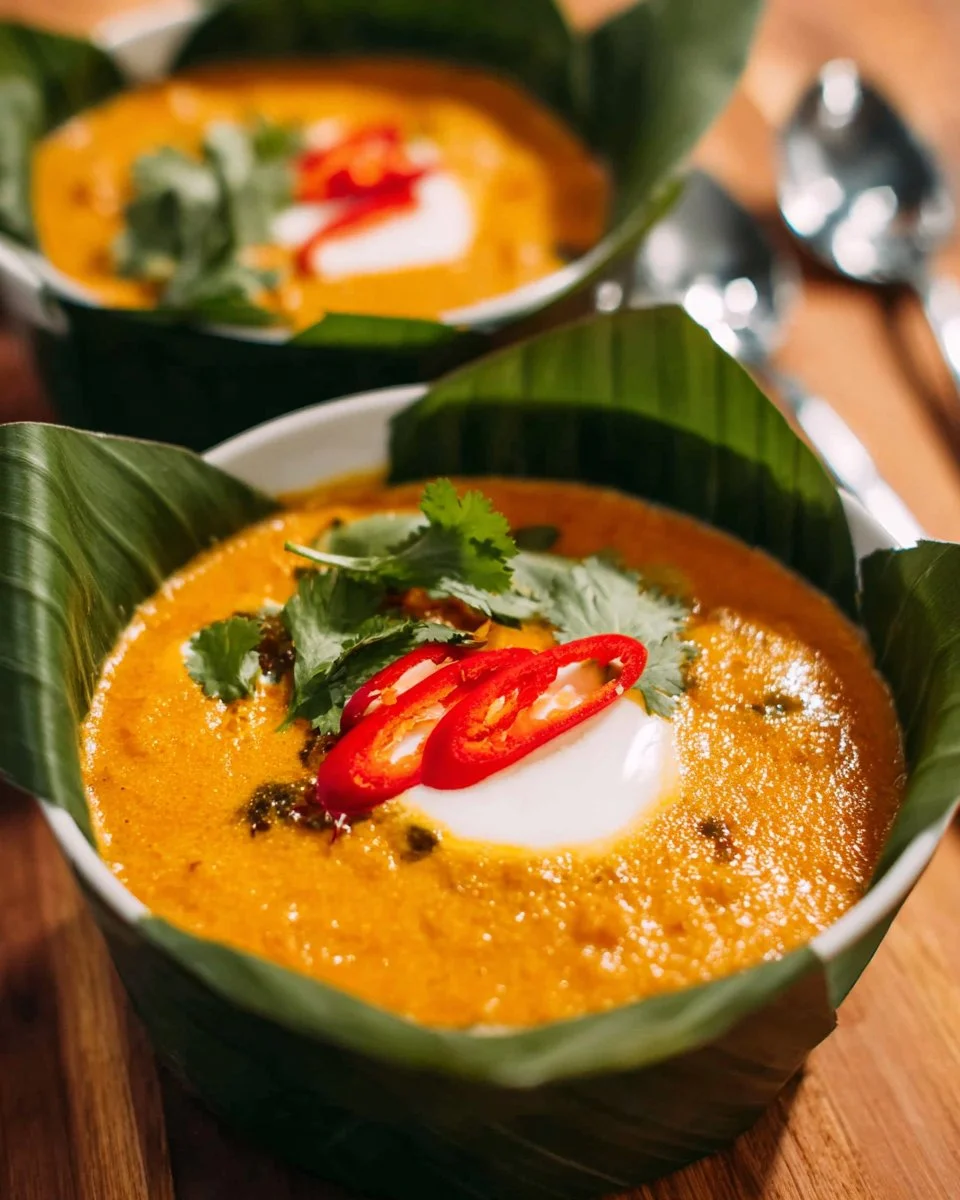
Savoring Thai Steamed Red Curry (Haw Mok): A Heartwarming Journey in a Bowl
Introduciton
Picture this: a rainy Sunday afternoon, the air filled with the warm, comforting aromas of spices swirling in the kitchen. As a passionate home cook, I find myself reaching for my favorite red curry paste, reminiscing about my family’s cozy dinners shared around the table, enjoying dishes that celebrate our Thai heritage. One of my absolute favorites is Thai Steamed Red Curry (Haw Mok)—a dish that strikes the perfect balance between rich flavors and comforting textures.
This isn’t just any recipe; it’s a vibrant custard-like sensation, bursting with the essence of coconut, kaffir lime, and just the right amount of fish—each spoonful a delightful experience. What I love about this version is how I’ve tailored it over the years, simplifying the steps yet intensifying the flavors, ensuring even the busiest of home cooks can whip up this Thai treasure on any given weeknight.
Whether you’re looking for a new family favorite or a dish that will impress your dinner guests, this recipe promises to be a wonderful addition to your culinary arsenal. Today, I’ll take you through the joys of crafting your own Haw Mok, so you can spread the love and warmth I’ve cherished for years. Let’s dive in!
What Are Thai Steamed Red Curry (Haw Mok)?
Haw Mok is a traditional Thai dish that has its roots in the coastal regions of Thailand. It’s an enchanting blend of seafood or fish mixed with fragrant spices, all lovingly enveloped in a rich custard that is steamed to perfection. Think of it as a Thai take on a soufflé, but with the powerful punch of red curry flavors.
The experience starts with the first bite: a silky smooth texture that melts in your mouth, showcasing a symphony of tastes—from the creaminess of coconut milk to a fragrant earthy finish from the kaffir lime leaves. What makes this dish truly unique is not just the intricate balance of flavors, but also the fact that you can easily adapt it to suit your tastes. Whether you prefer seafood or a vegetarian option, the possibilities are endless! Perfect for special occasions or cozy family dinners, Haw Mok is a dish that truly warms both the heart and soul.
Why You’ll Love This Recipe
Restaurant-Level Flavor at Home: Forget about overpriced takeout! With this recipe, you can recreate that authentic Thai flavor right in your own kitchen. I’ll share my favorite brands of curry paste and coconut milk, ensuring you get the best quality ingredients for a dish that tastes like it’s straight from a five-star restaurant.
Cost-Effective and Satisfying: Making Haw Mok at home is surprisingly economical! With just a few affordable ingredients, you can serve a delectable meal that feeds a crowd. Plus, it’s a fantastic way to use up leftover fish.
Customizable to Your Taste: You can easily modify this recipe to fit your dietary preferences. Love spicy food? Add more curry paste! Prefer it vegetarian? Swap in mushrooms or tofu for a delightful twist.
Simple to Make: I promise you that this recipe is beginner-friendly! With straightforward steps and intuitive guidance, you’ll find this dish easy to master, even if steaming seems intimidating at first.
Meal Prep-Friendly: You can make Haw Mok ahead of time and store it in the fridge or freezer, making it an absolute lifesaver for weeknight dinners or meal prep sessions!
Ready to get cooking? Gather your ingredients and let’s make some magic happen in the kitchen!

Ingredients
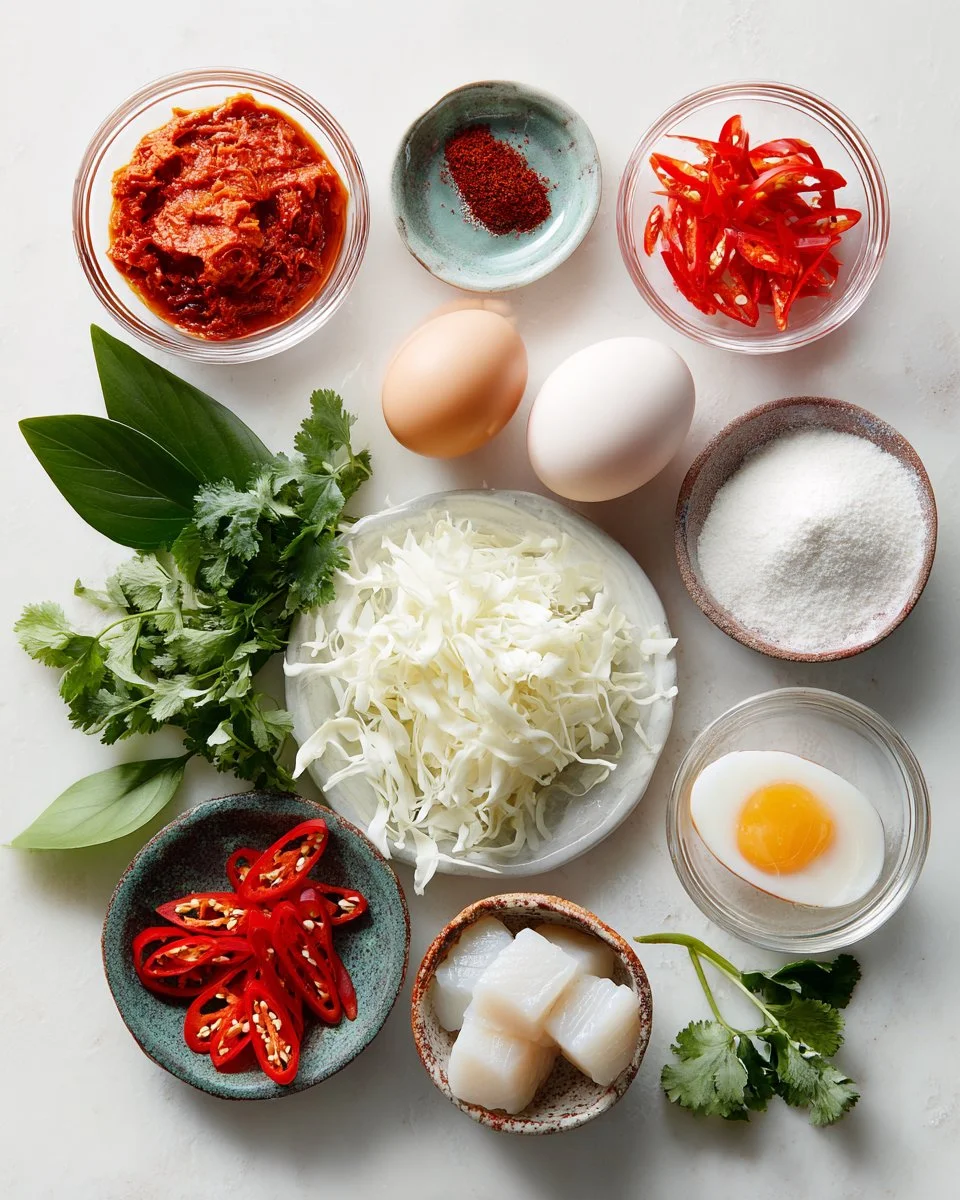
- 3 tablespoons red curry paste (look for a good quality brand like Mae Ploy or Thai Kitchen)
- 1 1/4 cup coconut milk (the richer, the better! Canned coconut milk works best)
- 1 tablespoon palm sugar, finely chopped or grated (can substitute with brown sugar if needed)
- 2 teaspoons fish sauce (use a robust brand like Red Boat for better taste)
- 2 large eggs (room temperature)
- 3 makrut lime leaves, finely julienned (fresh adds the best flavor!)
- 5.6 oz any kind of fish fillet (cod, tilapia, or even shrimp works great)
- 1/4 inch sliced
- 1 1/2 cups shredded cabbage and/or kale (adds a nice crunch)
- 8-12 leaves Thai basil (fresh is key!)
- Banana leaves (optional, but makes for a lovely presentation)
- Jasmine rice, for serving
- 1/4 cup coconut milk (for garnish)
- 1/2 teaspoon cornstarch
- Sliced red chilies or julienned red bell pepper (for garnish)
- Cilantro leaves (for garnish)
Notes on Ingredient Quality and Substitutions:
- Coconut Milk: Use full-fat canned coconut milk for creaminess.
- Thai Basil: Fresh Thai basil has a unique flavor, but regular basil can be a substitute in a pinch.
- Fish Sauce: This ingredient is what makes Thai dishes so aromatic; don’t skip it!
Prep Tip: Make sure your eggs are at room temperature! This helps them blend smoothly into the custard.
Step-by-Step Instructions
Preheat the Steamer: Start by preheating your steamer on medium heat.
Mix the Curry Base: In a mixing bowl, add the red curry paste. Pour in just enough coconut milk to dissolve the paste, whisking until smooth. Then, stir in the remaining coconut milk, eggs, palm sugar, fish sauce, and the julienned makrut lime leaves. Whisk until the eggs are well combined with the liquid. Gently fold in the fish.
Chef’s Tip: Whisk until fluffy to incorporate air; it makes for a fluffier custard!
Season to Taste: Check the seasoning by steaming or microwaving a small spoonful of the liquid to taste. Adjust with more fish sauce if needed.
Prep the Ramekins: If using banana leaves, line the ramekins with strips so your custard won’t stick. This not only prevents sticking but also adds a beautiful presentation.
Steam the Vegetables: Steam the cabbage and/or kale for about 3-5 minutes until wilted, then divide among the prepared ramekins. Add 2-3 Thai basil leaves to each.
Fill the Ramekins: Distribute the fish evenly among each ramekin and then fill with the curry custard, leaving about 1/2 inch of headroom.
Steam Until Set: Carefully place the ramekins in the steamer and steam for 15-20 minutes or until the custard is set and firm.
Visual Cue: It should look slightly puffed and be firm but springy to the touch.
Prepare the Garnish: In a small pot, dissolve the cornstarch in a splash of water, then add the remaining coconut milk. Stir and cook until thickened over low heat.
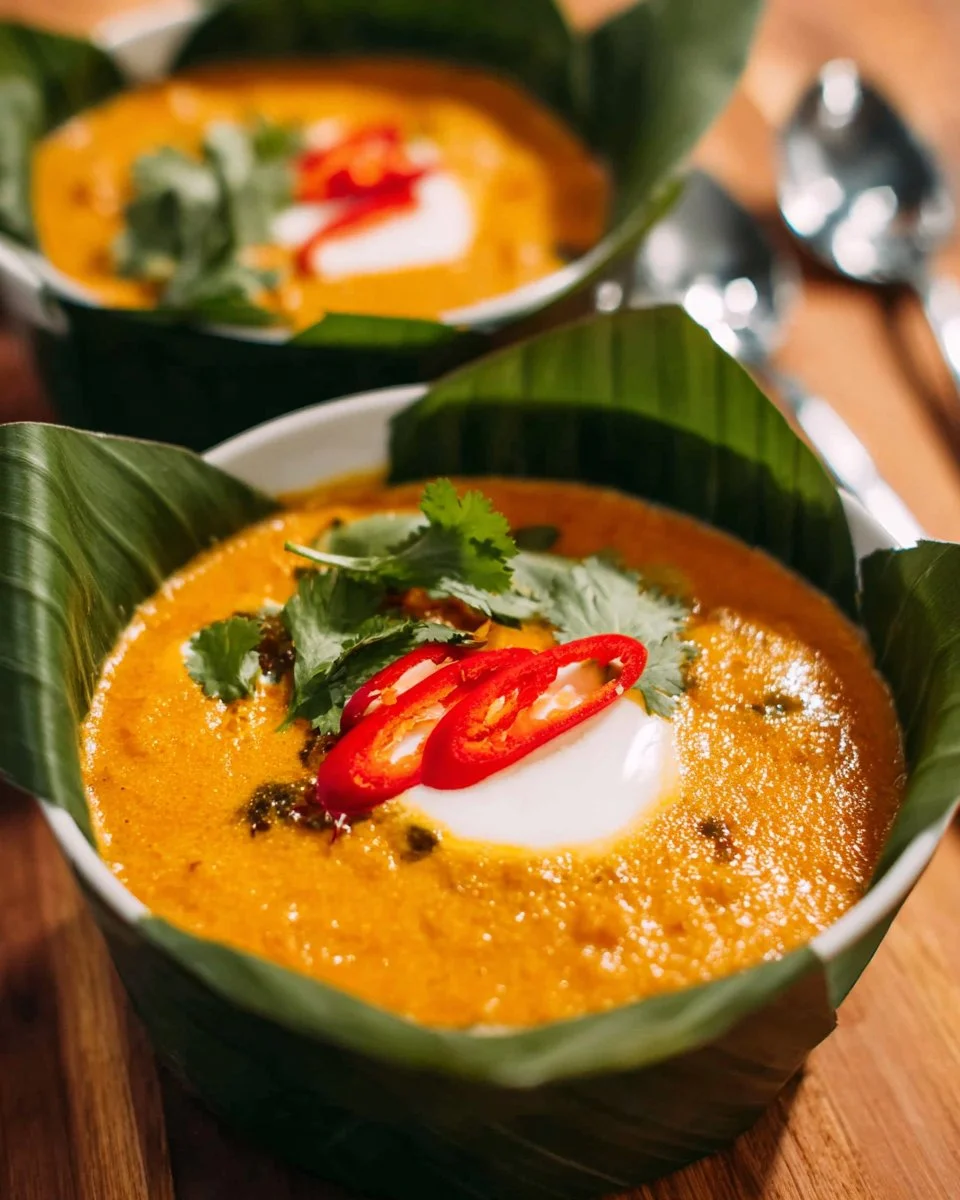
Serve: Once the custard is set, serve it topped with the thickened coconut, garnished with cilantro leaves and sliced red chilies, alongside fluffy jasmine rice.
Serving Tip: Serve hot, and watch everyone dig in with delight!
Expert Tips & Tricks
Storage Recommendations: Cooked Haw Mok can be stored in the fridge for up to 3 days. Reheat gently in a steamer or microwave.
Make-Ahead Instructions: You can prepare the curry custard mixture a day ahead and keep it in the fridge until you’re ready to steam.
Troubleshooting Common Problems: If the custard isn’t setting, check your steaming technique; too much steam escaping can hinder the cooking process.
Ingredient Variability: If you can’t find makrut lime leaves, fresh cilantro can add a punch of flavor, though it’s not the same.
Serving Suggestions
Serve your Thai Steamed Red Curry (Haw Mok) with fragrant jasmine rice, allowing the creamy sauce to soak into the grains. Consider adding a side of fresh cucumber salad for a refreshing crunch or a spicy chili dipping sauce on the side for an extra kick.
This dish brings a festive atmosphere, perfect for family gatherings or if you simply want to enjoy a little slice of Thailand right at home. You can even present the ramekins on a colorful platter, garnished with more fresh basil and red chilies for a vibrant touch!
Variations & Substitutions
Flavor Combinations: Feel free to experiment with different proteins like shrimp or scallops, or even go full vegetarian with mushrooms, tofu, or extra veggies!
Dietary Restrictions: For a gluten-free version, double-check your fish sauce and curry paste ingredients.
Seasonal Variations: During summer months, consider adding seasonal vegetables like zucchini or bell peppers to the mix for a burst of color and flavor.
Nutrition & Storage Info
- Prep Time: 15 minutes
- Cook Time: 20 minutes
- Total Time: 35 minutes
- Yield: Approximately 4 servings
- Estimated Calories: ~300 calories per serving
Storage Instructions: Store cooked Haw Mok in the fridge for up to 3 days or freeze for up to a month. Always reheat thoroughly before serving!
FAQ Section
Can I use chicken instead of fish in Haw Mok?
Absolutely! Chicken works wonderfully in this recipe too. Adjust cooking times accordingly, ensuring it is thoroughly cooked.Is there a vegan version of Haw Mok?
Definitely! Replace the fish with tofu or mushrooms, use plant-based curry paste and skip the fish sauce in favor of soy sauce or miso for depth.What if I don’t have a steamer?
You can improvise with a pot and a heat-proof plate or even use the microwave! Just ensure it’s covered to trap the steam during cooking.How do I know when my custard is set?
It should feel firm to the touch, but will slightly jiggle if you gently shake it. If it still looks liquid, give it a few more minutes.Can I make this in bulk for a party?
Absolutely! Just double or triple the recipe and use a larger steamer or multiple ramekins to accommodate your guests.How do I store leftover Haw Mok?
Store leftovers in an airtight container in the fridge for up to 3 days, or freeze for extended storage.Is there a substitute for palm sugar?
Brown sugar is a readily available substitute, but if you can find it, using palm sugar adds a unique depth of flavor!What can I serve beside Haw Mok?
Jasmine rice is traditional, but you can also serve it with simple steamed vegetables or a refreshing salad.Can I use frozen vegetables?
Sure! Just make sure to thaw and drain them before adding them to the ramekins, so your custard does not get watery.How spicy is this dish?
The spice level can be adjusted by using more or less red curry paste. Start with a smaller amount if you are sensitive to heat!
Conclusion
Thai Steamed Red Curry (Haw Mok) is not just a recipe; it’s a flavorful journey that connects you to the heart of Thai cuisine. The combination of aromatic spices and creamy textures makes for a dish that is truly magic. I encourage you to try this recipe—share it with your loved ones and create your own family memories around the dinner table.
If you try it, I would love to hear your thoughts! Drop a comment below, and check out my blog for more delightful recipes that celebrate the flavors of the world. Happy cooking!

Thai Steamed Red Curry (Haw Mok)
Ingredients
Method
- Preheat the steamer on medium heat.
- In a mixing bowl, add the red curry paste. Pour in enough coconut milk to dissolve the paste, whisking until smooth.
- Stir in the remaining coconut milk, eggs, palm sugar, fish sauce, and julienned makrut lime leaves. Whisk until well combined.
- Gently fold in the fish.
- Check the seasoning by steaming or microwaving a spoonful to taste. Adjust with more fish sauce if needed.
- If using banana leaves, line the ramekins with strips.
- Steam the cabbage and/or kale for about 3-5 minutes until wilted, then divide among prepared ramekins.
- Add 2-3 Thai basil leaves to each ramekin.
- Distribute the fish evenly among each ramekin, then fill with the curry custard, leaving about 1/2 inch of headroom.
- Carefully place ramekins in the steamer and steam for 15-20 minutes, or until the custard is set and firm.
- Prepare the garnish by dissolving cornstarch in a splash of water and then adding the remaining coconut milk.
- Stir and cook until thickened over low heat.
- Once the custard is set, serve topped with thickened coconut, garnished with cilantro leaves and sliced red chilies, alongside jasmine rice.